Your Contractor Keeps Delaying: What to Do
How to tell a legitimate delay from a contractor losing interest, the written request that changes behavior, and when slow progress becomes a breach.
Your Contractor Keeps Delaying: What to Do
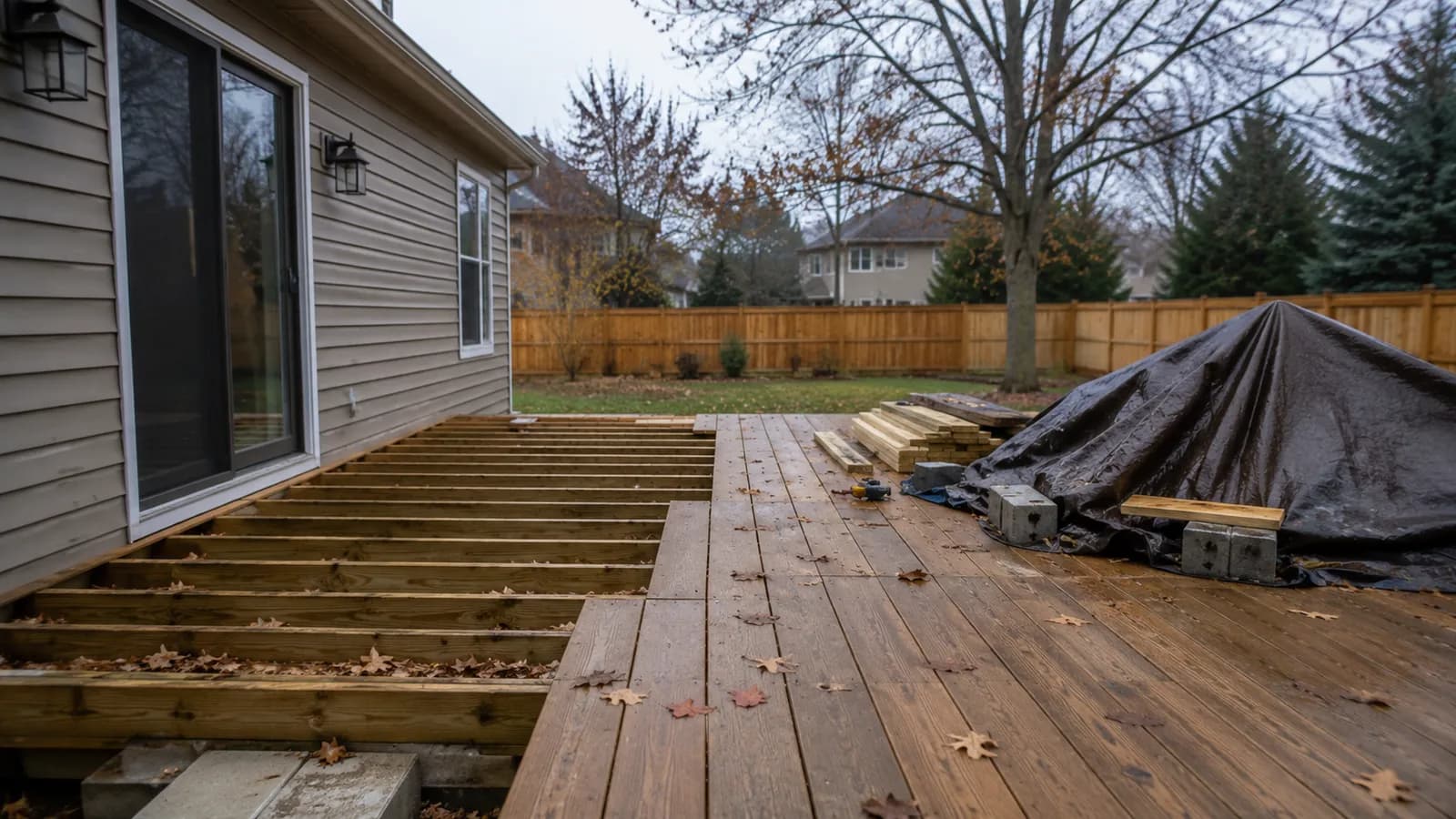
They were here for three days, then nothing for two weeks. They answer texts eventually, always with a reason, always with a new date that also passes. Your house is half finished and you cannot tell whether you are being managed or abandoned.
This is different from being ghosted outright, and in some ways harder to handle. A contractor who has vanished gives you a clear problem. A contractor who reappears just often enough to seem engaged gives you an ambiguous one, and ambiguity makes people wait far longer than they should.
Not Every Delay Is a Problem
Some causes are genuine and would affect any contractor:
- Weather, particularly for roofing, concrete, painting, and anything exterior.
- Permit and inspection timing, which is controlled by the building department rather than your contractor.
- Material lead times, especially for anything custom or specified.
- Hidden conditions, such as rot or failed structure found once work opens up. This legitimately changes both scope and schedule.
- Illness or crew injury, which is real and unavoidable.
What separates an acceptable delay from a warning sign is not the delay itself but the communication around it. A contractor managing a genuine problem tells you what happened, what it means for the schedule, and what the new dates are, ideally before you have to ask. A contractor in trouble goes quiet and produces a new reason each time you chase.
The most common non-legitimate cause is straightforward: they have taken on more work than they can staff, and your job is losing the competition for their crew. Frequently it is losing because you have already paid enough that finishing yours is less urgent than starting someone else's.
Step 1: Ask for a Written Revised Schedule
Stop accepting verbal dates. Request, in writing, a revised written schedule covering:
- What remains to be done, broken into phases.
- The date each phase starts and finishes.
- What is causing the current delay, specifically.
- What they need from you, if anything, to proceed.
Keep the tone businesslike. You are asking a professional for a project schedule, which is an entirely ordinary request.
The response is highly diagnostic. A contractor who is busy but committed produces something within a few days. A contractor who avoids the question, refuses to commit to dates, or goes quiet has told you where your job sits on their list. Refusing to provide an updated timeline is one of the clearer warning signs there is.
Step 2: Document Everything, Starting Now
Whatever happens next runs on your records:
- Keep every text and email. Do not rely on memory or phone calls. Where something important is agreed verbally, follow up in writing summarizing it, which both creates a record and gives them a chance to correct it.
- Photograph the site regularly, dated. Weekly is enough. A sequence of near-identical photographs over six weeks is remarkably persuasive evidence of no progress.
- Log every visit: date, who attended, hours worked, what was done.
- Keep a communication log: every call and message, with dates and what was said.
- Track payments against progress, which is often where the real story emerges. Paid 70% against 30% of the work completed is a specific and serious problem.
Step 3: Use the Contract and the Money
Read your contract for the provisions that apply:
- Completion date and any late clause. Some contracts carry a per-day credit for overrun.
- The payment schedule. If payments are tied to milestones rather than dates, you have leverage: the next payment is simply not due yet.
- Termination provisions, including what notice is required and what you owe for work completed.
- Dispute resolution, which may require mediation before anything else.
Do not release further payments for work that has not been done. If you held back retainage, this is exactly the situation it was for. Be precise about why you are withholding and tie it to specific incomplete work, because withholding without a stated contractual reason can be characterized as your breach.
If you have already overpaid relative to progress, that is the central problem and it should shape everything you do next. Your leverage is largely gone, and the priority becomes getting the work finished rather than winning the argument.
Step 4: Escalate in Writing
If the revised schedule does not arrive or is not met, send a formal written notice. It should:
- Reference the contract and the agreed completion date.
- State the facts: dates worked, work completed, time elapsed.
- Require a specific remedy, namely a return to site and a completion date.
- Set a firm deadline, typically seven to fourteen days depending on scale.
- State what happens if the deadline passes, whether that is termination, engaging another contractor, or a complaint to the licensing board.
Send it in a way that proves delivery. This document does real work. It converts a series of missed conversations into a documented demand, and for a licensed contractor the mention of a board complaint is meaningful, because their license is their business.
Step 5: Formal Options
The licensing board. Many states treat abandonment or unreasonable delay as a disciplinary matter. A complaint costs nothing and carries weight.
Termination. Follow the contract's procedure precisely. Terminating incorrectly can put you in breach. Document the state of the work thoroughly before anyone else touches it, because that record establishes what you paid for versus what you received.
Legal action. Unreasonable delay can constitute breach of contract. A pattern of a contractor disappearing for weeks, returning briefly to perform minimal work, then disappearing again is a recognized pattern in these disputes, and the documentation above is what proves it. Small claims court suits modest amounts; larger losses justify a construction attorney.
Mediation. Some areas offer construction ombudsman or homeowner advocacy services that mediate at low or no cost. Worth checking before litigating.
Preventing It Next Time
Almost all of this is preventable at the contract stage:
- Written start and substantial completion dates, as actual dates.
- Milestone dates for phases that matter to you.
- Payments tied to completed milestones, never to the calendar.
- Retainage of 10% to 15% held until the punch list is closed.
- A stated consequence for overrun, even a modest one.
- Ask about their current workload before signing. A contractor with a realistic backlog and a start date eight weeks out is usually a better bet than one who can start tomorrow.
Frequently Asked Questions
How long is too long before I take action?
There is no universal number, and it depends on scale, but the useful trigger is communication rather than elapsed time. A two-week gap that was explained in advance with a revised date is normal project management. A two-week gap with no contact, no explanation, and no new date is a problem regardless of the project's size. As a practical rule, ask for a written revised schedule after the first missed date rather than the third, because doing it early is low-cost, entirely reasonable, and establishes a record from the outset. A contractor who is genuinely committed will not be offended. Waiting politely for months is the most common and most expensive mistake homeowners make here.
Can I bring in another contractor to finish the job?
Eventually yes, but not immediately, and the sequence matters a great deal. Most contracts and most courts expect you to give the original contractor written notice and a genuine opportunity to return and complete before you replace them, and terminating without following the contract's procedure can put you in breach and forfeit claims you would otherwise have. Once you have issued formal notice with a deadline and it has passed, engaging another contractor becomes defensible. Before anyone else starts, document the existing work exhaustively with photographs and ideally an independent assessment of what was completed, because that record is what establishes the value of what you already paid for.
What if the delay is genuinely not their fault?
Legitimate causes deserve reasonable accommodation, and being unreasonable about weather or permit backlogs will damage a working relationship you still need. What you are entitled to even then is communication and a revised plan: what happened, what it means for the schedule, and the new dates. A good contractor provides that without being asked. It is also worth checking your contract, since well-drafted ones define excusable delays narrowly, covering weather, permits, and supply failures while excluding the contractor taking other work. If the stated cause keeps changing, or the same explanation recurs for months, treat the pattern rather than any individual excuse as the information.
Start With a Contractor Who Can Actually Take the Job
Overcommitted contractors are the most common cause of schedule slippage, and it is largely avoidable at the hiring stage.
On Win My Work, contractors choose which projects to quote based on the scope and timing you post, so the ones bidding are the ones with capacity for your work. Describe your project once and compare quotes, timelines, and terms from verified, licensed and insured local contractors before you commit to anyone.
Ready to Start Your Project?
Get free quotes from verified, licensed and insured local contractors on Win My Work - safe, with no obligation.