Insurance Denied Your Roof Claim: What to Do Next
Why roof claims get denied, what to do when the adjuster and your roofer disagree, and the documentation that gives a reinspection request real weight.
Insurance Denied Your Roof Claim: What to Do Next
Your roofer says the hail did it. Your insurance company says the roof was old and worn. One of those conclusions pays for a new roof and the other leaves you with the bill.
This is one of the most common and most frustrating positions a homeowner can be in, and it is not the end of the process. A denial is a decision, and decisions can be reviewed. What follows is how the process generally works and what to ask at each stage. Policies and state rules vary considerably, so treat this as a map rather than advice on your specific claim.
Why Roof Claims Get Denied
Understanding the stated reason is the whole starting point, because your response depends on it.
- Wear and tear rather than a covered event. Policies cover sudden accidental damage, not deterioration. This is the most common denial and the most commonly disputed, because storm damage and age-related wear can look similar to a non-specialist.
- Roof age. Where a roof has reached or passed its expected service life, insurers frequently deny or apply heavy depreciation. Some policies switch older roofs to actual cash value rather than replacement cost, which can dramatically reduce a payout without denying it outright.
- Lack of maintenance. If the insurer concludes the damage resulted from neglect, they may decline.
- Pre-existing damage that predates the policy or the storm.
- Policy exclusions, which vary widely. Some policies exclude cosmetic hail damage specifically.
- Late filing, missing the notice deadline in the policy.
- Insufficient documentation to establish what happened and when.
The Adjuster Is Not a Roofer
This is the single most useful thing to understand about the disagreement.
Your insurer's adjuster is an insurance professional. They are trained in policy interpretation, loss estimation, and claim handling. They are usually not a roofing professional, and roof damage assessment is a genuinely specialized skill. Hail bruising on asphalt shingles, granule loss patterns, and the difference between storm impact and thermal cracking are things roofers spend years learning to read.
That does not make the adjuster wrong. It does mean an adjuster's conclusion is an opinion that a qualified roofing professional can legitimately contest with evidence, and that the disagreement is not necessarily anyone acting in bad faith.
Step 1: Read the Denial Letter Properly
Insurers are generally required to state the reason for a denial and cite the policy provision relied on.
Get that in writing if you only received a phone call. Then find the cited provision in your actual policy document and read it. Homeowners are often surprised at this stage, sometimes because the exclusion is narrower than the denial implied, and sometimes because the policy genuinely does say what the insurer said it says.
Also check your deadlines. Policies and state regulations impose time limits on requesting review, invoking appraisal, and filing suit. These are usually the tightest constraints in the whole process.
Step 2: Request a Reinspection, With Your Roofer There
This is the most effective practical step available to most homeowners, and it costs very little.
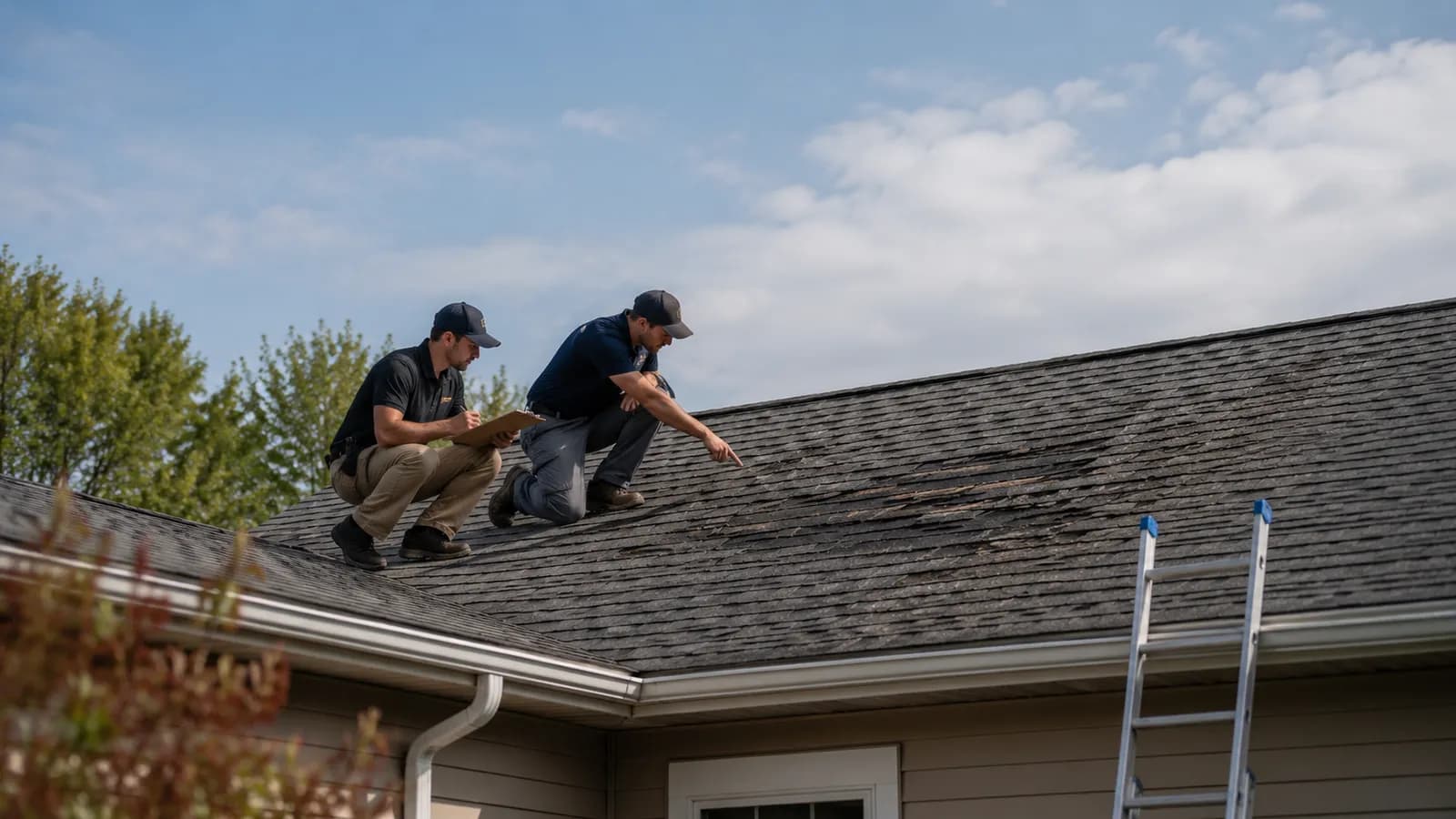
Contact your insurer and request a reinspection. Then arrange for a qualified roofing contractor to be physically present during it.
Having your roofer on the roof at the same time as the adjuster changes the conversation from two reports written in isolation into a discussion in front of the actual evidence. Your contractor can point to specific damage, explain why it reads as impact rather than wear, and make sure areas the first inspection missed are actually examined. Many disputes resolve here without anything more formal.
Step 3: Get an Independent Written Assessment
If the disagreement survives the reinspection, you need documentation that stands on its own.
A useful independent report establishes three things:
- Cause of the damage, with the reasoning explained rather than asserted.
- Extent of the loss, area by area.
- Replacement cost, itemized.
Two sources of such a report:
- A licensed roofing contractor experienced in insurance work. Experience with claims matters here; a superb roofer who has never written for an insurer may produce something less useful.
- A public adjuster, who works for you rather than the insurer, typically for a percentage of the settlement. Verify they are licensed in your state and read the fee agreement carefully before signing.
Where an independent assessment differs materially from the insurer's, you have moved from disagreeing to having evidence. That is what the later stages of the process run on.
Step 4: Escalate Within the Insurer
Most carriers have an internal appeals or reconsideration process. Use it, in writing, attaching your independent report and photographs.
Keep it factual and organized. Reference the policy provision cited in the denial and explain specifically why the evidence does not support that conclusion. Emotion is understandable and does not help.
Keep a log of every call, including the date, who you spoke to, and what was said.
Step 5: Appraisal, Regulators, and Legal Options
The appraisal clause. Many policies contain one, and homeowners rarely know it exists. It is a process for resolving disputes about the amount of loss, in which each side appoints an appraiser and the two select a neutral umpire. It is generally faster and cheaper than litigation. It resolves disagreements about amount, not usually about whether something is covered at all, so it fits some disputes and not others. Check whether your policy has one and what invoking it commits you to.
Your state insurance regulator. Every state has a department of insurance that accepts consumer complaints. This costs nothing, creates a regulatory record, and carriers do respond to it.
An attorney. For large losses, or where you believe the claim was handled in bad faith, a consultation is worth the cost. Many work on contingency for insurance disputes. Ask about deadlines early, since some are short.
Frequently Asked Questions
Does filing a claim that gets denied raise my premiums?
It can, and this is worth understanding before you file rather than after. Insurers record claims activity, including claims that were denied or closed without payment, and some use claim history in pricing and renewal decisions regardless of outcome. This is one reason it is worth having a roofer assess the damage before you file, so you have a realistic sense of whether there is a genuine covered loss and roughly what it is worth. Filing a claim for damage well below your deductible is usually pointless and can carry a cost. If the damage is substantial and clearly storm related, that calculation changes entirely and you should file.
Can I get a second opinion after I have already accepted a settlement?
Sometimes, though it gets harder once you have accepted. If you signed a release, reopening is difficult but not always impossible, particularly where additional damage is discovered later that was not reasonably visible at the time, or where the settlement was based on an inspection that missed something material. Many policies allow a supplemental claim when the true scope turns out larger than the original estimate, which is common once a roof is opened up and the decking underneath is visible. Contact your insurer promptly with the new evidence and your contractor's documentation. Do not cash anything described as final settlement while you still have unresolved concerns.
What does a public adjuster actually cost?
Public adjusters typically work for a percentage of the claim settlement, and the rate varies by state, with several states capping it by statute. On a straightforward claim that was going to be paid anyway, that fee may be poor value. On a denied or heavily underpaid claim where you would otherwise recover little, it can be worth a great deal. Verify the license with your state regulator, read the contract for what happens if you cancel or if the claim is denied entirely, and be cautious of anyone who approaches you unsolicited after a storm, which overlaps with the storm chaser pattern. Get the fee structure in writing before signing anything.
Get an Independent Roof Assessment
The evidence that moves a claim is a qualified, independent opinion on cause, extent, and cost.
On Win My Work you can describe your roof project once and get quotes from verified, licensed and insured local roofers, including contractors experienced in insurance work. Quotes cost you nothing and give you documentation you can use.
Ready to Start Your Project?
Get free quotes from verified, licensed and insured local contractors on Win My Work - safe, with no obligation.